
A hybrid hospitality-lettings model as property owner-operator, positioned for mid-tier, rates significantly above rental with operations overheads below hospitality.
Serving digital nomads and remote workers for workations, offering in-house coworking and facilities, alongside community connection and adventure.
- €240k capex
- 15% net yield
- €1300 monthly rates
- 2–8 week longer stays
- 12–16 capacity
- coworking for remote work
- 50% common spaces
- towns for vivacity
- nature for adventure
- facilitation for great experiences
An optimised approach
- acquisition of low-cost atypical properties for renovation
- purpose-designed space planning ideal for shared use
- more smaller private rooms and more larger common spaces
- less obvious locations brought alive with community facilitation
- higher rates with lower overheads
- memorable, simple and scalable brand
- discounted use for shareholders, fractional use for co-founders
Enabling growth
By developing business practices to scale cost effectively, delivering multiple locations, whilst creating a loyal base of returning members.
Interested in learning more? jacob@hub.house · Whatsapp
Founder — Jacob Jay
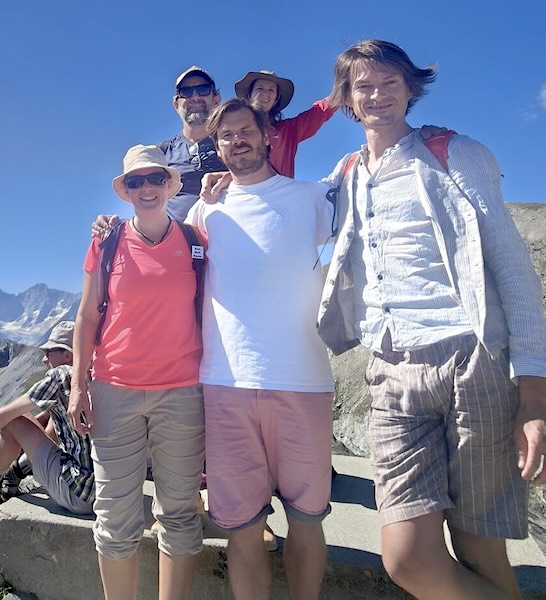
- pictured far right, attending Swiss Nomad Fest.
- ex. technical director with a small London marcomms agency
- created the first blended+hybrid coliving+coworking in 2010
- ran for 4 years
- empty building given basic fitout
- 14 beds, 10+ desks coworking open to public
- event space, in-house cook
- bespoke tech member management
- expanded to a partner-operated location
- creator of the coliving.community directory with 400+ manually classified spaces
- diverse tech/UX/management startup roles
- undertaken renovation in France, reselling at +115% in popular tourist destination
- guest at many coliving spaces and part-time digital nomad
- started a (pre-pandemic) crowdfunding campaign to renovate a mill in Portugal as a coliving; obtaining excellent reponse, meeting town council, but ultimately shelving
- actively tracking the coworking and coliving movements since emergence
The first property
the south of France – Cévennes & Ardèche


- a world-class tourist destination overlooked by digital nomads
- under represented in the category — only 3 spaces in same class (see map)
- accessible destination without missing adventure
- varied environments and activities, plus great food
- founder based and has experience here
The market
The segment offer is that of a slow travel workation — a long getaway or retreat for professionals whom can travel whilst they work, taking advantage of down time for adventure and camaraderie.
Comparatively
Sitting neatly between traditional hospitality (hotels, guesthouses) and long-term lettings (rentals), with a highly adjustable proposition (audiences, pandemics, seasons).
| lettings | coliving | hostels | hotels | |
|---|---|---|---|---|
| rates | low | mid | mid | high |
| operations | low | mid | mid | high |
| churn | low | mid | high | high |
| adaptability | low | high | mid | low |
| investment | low | variable | low | variable |
Opportunity
Changing lifestyles allow location flexibility, but…
- hotels are unsuitable for longer remote-work stays
- random AirBnBs have bad workspace
- participation with others preferred over isolation
- difficulty of escaping city routine without loosing connection
At boutique destinational colivings guests pay a premium for…
- a community of like-minded professionals upon arrival
- more and better shared facilities
- ergonomic workspaces in the building
- organised opt-in activities and entrepreneurial exchange
- inclusive transparent pricing with flexible booking
- expanding their horizon of possibilities
Audience
Existing targetting is almost exclusively at digital nomads, seeking to break their isolation during travels whilst avoiding hassle — yet notably outnumbered by the latent and much more significant segment of remote-working professionals seeking occasional escape from hybrid-work routines to share experiences whilst remaining connected and avoiding isolation.
- digital nomads — a niche but significant group whom intrinsically work away semi-continiously; reliable easy to target and having reoccuring demand, if lower tolerence for higher prices
- no well established size, but estimates over 40m global
- informally up to 80m if including workations
- over 20% of nomads work with employer recognition and support
- travel at will to anywhere that appeals and works for them
- adventurous professionals — whom combine remote work with travel — seeking escape from the city, interesting connections and invigoration; whilst harder to target they're a much larger audience with strong spending power
- no known size but members of coworking spaces closely align as a segment having over 1.5m members in 6800 spaces across Europe
- workations have 11.7% compound growth
- 650,000 UK remote workers have moved abroad or become digital nomads / slow travellers (LiveCareer)
- roughly 1 in 3 knowledge workers plans at least one workation trip per year (multiple studies)
- platforms such as Airbnb report stays of 28+ days now account for very significant revenue
- 72% of remote-capable employees in the EU expressed the intent to take a workation (Eurofound/SD Worx)
- 60% of EU "knowledge work" is now hybrid-eligible (McKinsey)
- solo travellers — whilst looking primarily for activities with others, this user will adapt to a bleisure approach and include some work when there's good community, else can simply chill or do their own exploring whilst others work, then gathering to do more as a group
- estimated over $500 billion with around 15% growth due to changing demographics and lifestyles [The Extended Stay]
- women represent over 65% and GenZ/Millennials over 50% (with 75% planning to travel solo) [research report summary]
- team retreats — represent a strong secondary offering in off-seasons when their exclusive use can be accommodated
The wider trend towards coliving adoption has significant year-on-year growth in the wider residential sector for collaborative housing finds that "over half of Europeans (56%) find the idea of co-living genuinely appealing" (RE/MAX 2023 European Housing Trend Report) this change of opinions has impact on wider perceptions such as to encompass collaborative working holidays.
Offering
Primary appeal is good people amongst whom to work with good facilities. Surroundings are secondary providing it is easy to access, buy food, go to a restaurant, take a walk,…
- easy booking and an inclusive price
- community facilitator organising events and outings
- some communal meals together
- functional facilities to look after oneself
- good facilities to work (ergonomic, quiet, fast internet)
- nice facilities to hangout (lounge, terrace/garden, sauna, …)
- well organised property and spaces (cleaning, storage, washing, …)
- trails for a local stroll or run
- nearby places to pop out to and explore when not working
- some impressive local scenery and towns to explore
Unlike tourism most of the audience primarily work typical hours, and during off hours outings are participated in together, thus specific attractions rank low because there's always things to do with others regardless. Nontheless attactions add value and can significantly increase prices in combination with the fundamental qualities of the offering.
What's a coliving hub?
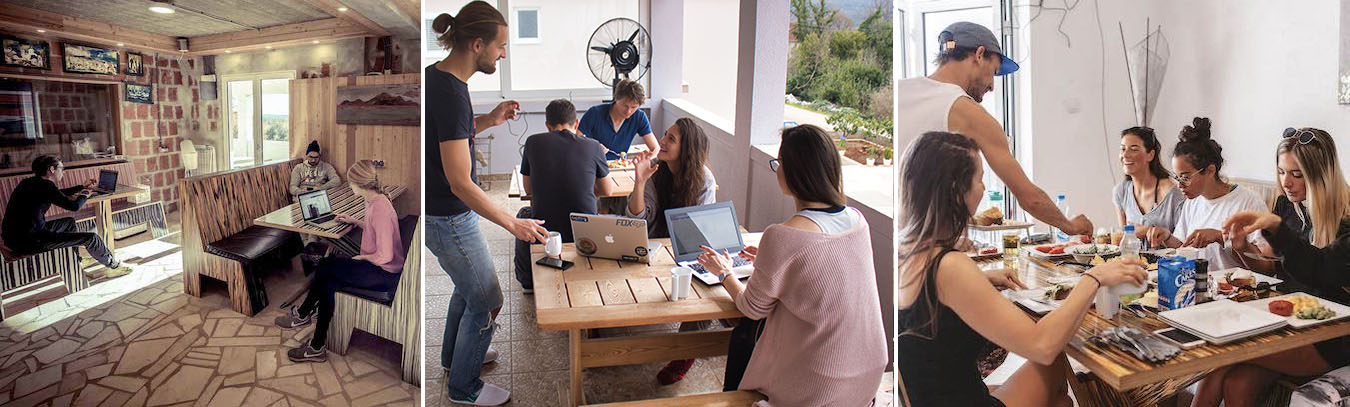
A shared home and workspace, where we also share some of our purpose and learnings.
For a workation to escape routine, as a retreat to dig into projects, or as a base.
As an entrepreneur, remote worker, digital nomad, a creative, or anything else!
Benefit from shared facilities (cinema, bikes, workspaces, ice-cream maker, …).
Get closer to nature whilst remaining connected to the wider world.
Participate together, when you wish, for outings, meals, skill shares…
Be part of community respecting innovation and independence.
Competition
The most notable multi-location operator is Outsite, whom target the wider market with a diversified offering having both larger properties unsuitable for either work or living, yet also smaller in the boutique format. The vast majority of boutique coliving spaces globally (at least 100 having similar features) are independent, though few have made investment to specifically adapt their properties.
The following base rates are typically for the cheapest room during shoulder (mid) season.
Whilst Hub House places affordably low on this list, its room pricing has an unusually wide range across 5 classes rising 80% — offering broad appeal and adaptability. Relative comparison might better use the 'plus' class at €1050/month, which still sits low.
Highest rates in-class are for the French Alps with great community and surroundings, yet only nominal facilities — at €2400/month in high season for an ensuite.
Against more typical rates around €1400/month, usually only a shared bathroom, Hub House will be offering an ensuite with better facilities and facilitation for a value increase above 30%. As this rate is on-par with other spaces at lower-spec, scope remains to increase prices.
Finances
Located in the French government's rural revitalisation zone, benefitting from zero-rated property tax and zero-rated corporate income tax for 5 years, with reductions into year 8. Not included in estimates, however offsets against target revenue growth with potential for improved returns.
No dividend payouts can be expected for 2 years, and operations at capacity should not be expected for 5 years. Phased delivery permits initial partial operations mitigating runover or deferred funding, however revenue would be reduced until fully specified.
Funding
€240k cash equity; €300k subscriber capital comprising:
- €90k founder
- ~€50k loan (TBC)
- ~€100k investors (instruments negotiable)
- ~€60k sweat equity (renovation lead, founder)
Spend
- ~€150k, renovation materials, furnishings and equipment
- ~€10k, minibus (2nd hand)
- ~€20k margin
nominal, operational runway
Of which ~€50k deferable (e.g. sauna, minibus).
Operations
- €86k target revenue
- ~€7.5k reserve fund (FF&E & CapEx) †
- ~€33k OpEx ‡
- 62% gross margin **
50% - 53% adjusted margin (EBITDA/FCF)
41% - 17% net yield
15% - 15% adjusted yield
12.5% - 13% cash on cash ***
10.5%
Yields on total equity cost.
† at ~6% / €5k, FF&E reserve fund is higher than typical hospitality due to coliving having higher consistent use of common facilities. Some CapEx reserve fund at ~3% / €2.5k is included, e.g. for vehicles, bikes and windows having shorter forecastable lifespans.
‡ OpEx may have improved optimisation at capacity therefore could reduce.
** Gross margin here covers operational costs except reserves.
*** Cash-on-cash after tax threshold of 15% to 42k then 25%, however not accounting for a proporation of investment as debt, instead assuming all paying dividends.
Operational costs assume direct marketing and outreach strategies, and therefore do not include any coliving booking platform nor promotion fee (generally 10%)s.
Revenue
Please enquire for cashflow. See Units below for target rates.
- will be maintained under VAT exemption threshold at €93k
Founder remuneration
Figures above assume no salary which incentivises operations for dividend payouts, however a nominal salary (not exceeding €10k) may be added (also shown with). If the delivery margin is not used this shall become a bonus incentivising delivery on budget. Subject to the additional funding terms and instruments.
Shareholder use
A discount value shall be available for shareholders whom wish to use it in lieu of dividends, set annually based on occupancy.
This will be the value corresponding dividend payouts of the prior year, increased by the vacancy proportion of the booking for the same season the prior year (e.g. if occupancy was 70%, then 30% will be added to its value). Use during peak months not permitted, yet exceptions may be requested on short notice when more than 2 room available.
Founder and cofounders have specific terms permitting use at any time in lieu of dividends and subject to restrictions.
Model
Coliving is a hospitality and rental cross-over, Hub House specifically operating in the destinational coliving segment offering stays generally between 2 and 90 days. Structured as a single-entity owner and operator (not PropCo–OpCo).
Leveraging acquisition of small old hotels and and larger village houses, these on the market no longer offer adequate yield due to renovations, thus low acquisition. Refit of such properties avoids capital waste acquiring better functioning property yet that would still require works to optimise and adequately differentiate.
- community facilitation and housekeeping through trained volunteer staff employing sector best practices — not simply crossing fingers that a volunteer has the capability
- wide accommodation offer spanning lower (pods) to mid-upper segments (premium ensuites)
- most commonly 4 weeks stays, managed through a bespoke booking system maximising occupancy; some 1 week stays permitted to better target city escapes for busy professionals
- discounts for stays of 1–2 months, for stronger community and reduced onboarding
- potential additional revenue stream with team retreats (during off season)
- pandemic survivable due to lower capacity and longer stays
Seasonality
- High: 15 weeks · May, June, July, early Aug · 80% occupancy
- Mid -20%: 16 weeks · Apr, late Aug–early Oct · 80% occupancy
- Low -60%: 12 weeks · Mar, late Oct–early Dec ·50% occupancy
- Closed: 8 weeks · Jan, Feb
Aug is not peak due to high temperature and low water, as Aug/Sept are at mid-season rates despite being a high-demand tourist season, occupancy could be higher and rates could be increased, yet at the very least this is excellent for promotion as €1050/per month for an ensuite is unapproachable. Christmas/NYE will be a special event thus mid-season rates. Low season is not a revenue driver, functioning mainly to build community and reputation, nonetheless with its exception rate reductions bringing it almost inline with regular rentals, could drive higher occupancy that expected. Transitions between seasons will be adjusted with offers, encouraging longer / overlapping stays.
Differentiation
The market is not sufficiently saturated, even amongst spaces exclusively targetting digital nomads, however having some helps significantly build return guests and reputation…
- purpose designed spaces and fitout
- below market rates (initially)
- ergonomic separated lively and focus coworking
- high proportion of ensuites
- lively and focus social spaces
- nature, shops, transit at door
- community focus
Primarily identified by purpose designed common spaces as very few colivings actually optimise facilities and layouts, due to not owning their properties thus having both lower revenues and excessive costs investing. In addition limited experience plays a significant factor e.g. just one 4-ring hob in a small kitchen for 24 people at a boutique destinational property that undertook a full refit in a prime location…
Often even the dining table or sofas don't fit everyone as a group together, and that's before considering the existence of proper desks.
In addition it is uncommon to have spaces supporting multiple simultaneous uses, e.g. when residents have a fun social gathering but the coworking is adjacent, work has to be interrupted.
Other spaces have highly variable community experience across the year as they do not train their volunteers, yet with a small investment in this it will be more consistent.
Positioning
Balanced mid-tier having good specification and designed for purpose. Most colivings whilst offering character and on occasion good facilitation, have average specifcation.
Whilst there's no high-end offerings, due to guests having alternate wider choices (outside coliving), Hub House properties will aim for community diversity, with at least one premium room having higher specification, but most being standard ensuites, supplemented by affordable shared rooms/pods. Many coliving spaces also do not offer ensuites despite being strongly preferred, therefore standard units will be ensuite becoming a significant factor in attracting guests.
Nonetheless a notable aspect of the appeal of community living (at least not for too long) is that everyone adapts and compromises, even when paying €2,000/month for average facilities.
Target rates are representative of a moderate sevice level, thus with good ccommunity facilitation, the rates should be easily raised.
Whilst target locations are not well known they are no less interesting, especially for the more notable audience of remote-workers coming from European metros and whom will spend longer getting to know the area slowly, and ideally returning. With good rental rates the properties due to their singular focus on actual needs, should have excellent demand, without being dependant upon the temperamental digital nomad segment.
Units
See typologies. Target rates, lower during earlier phases of development. (Additionally some periods may be advertised as offers, not distinct rate variations.)
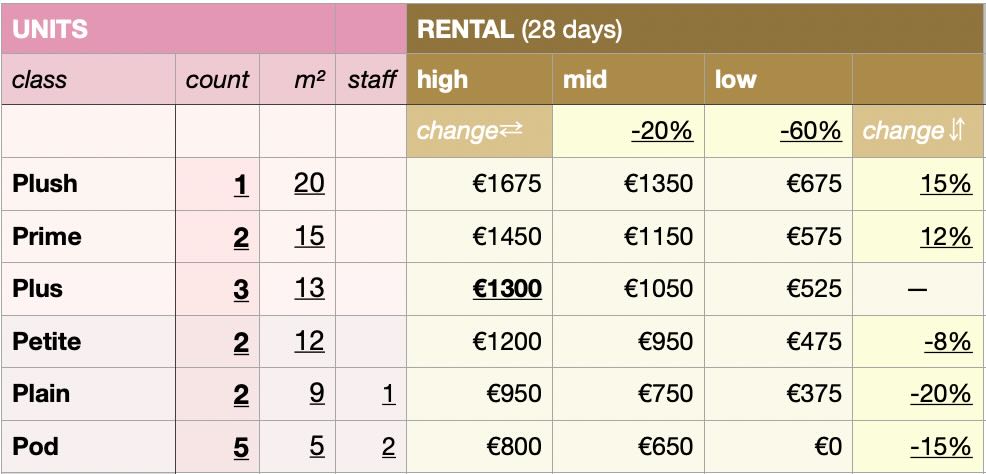
Fitout and facilities
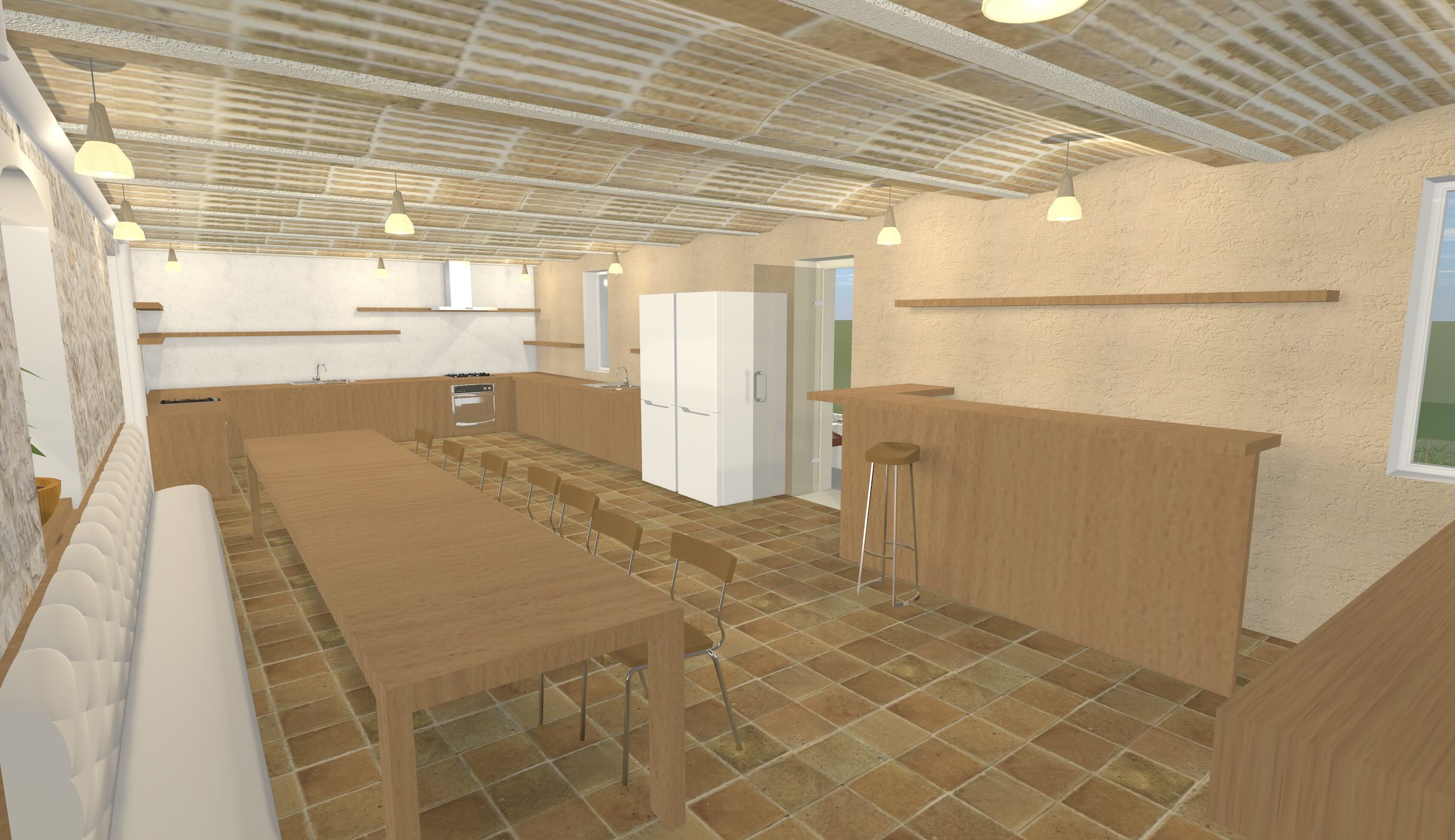
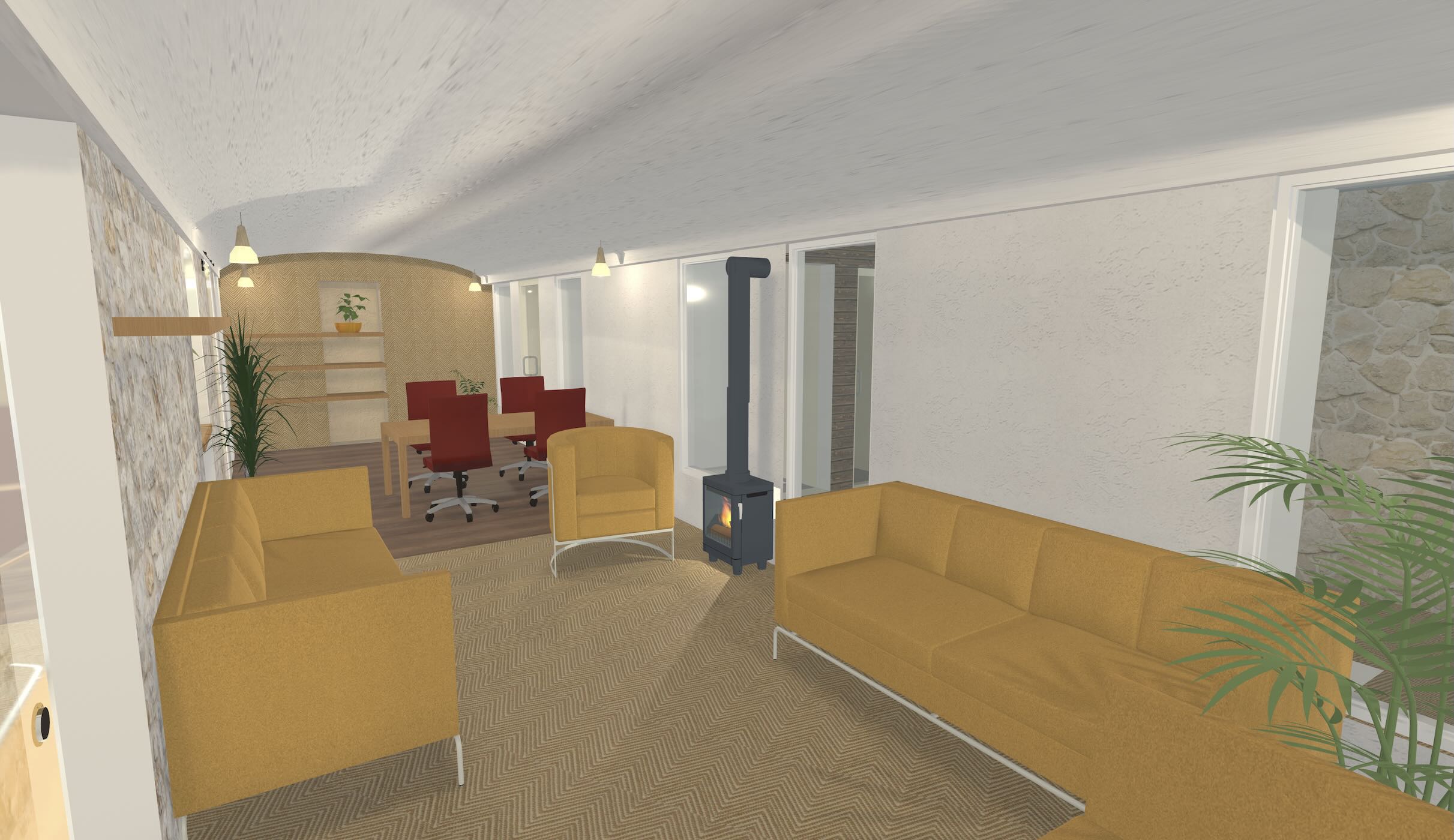
Accommodation classes will cover the breadth of the market ensuring both demand reslience and community diversity (varies per property, see reports).
Designed for simultaneous uses by multiple members. Most other colivings fail on multiple counts, whether a too small kitchen, intrusive access to bedrooms through a workspace, or simply carrying clothes from a washer up 5 storeys.
Having experience both operating and using such spaces, the founder understands the design principles to maximise both function and interaction, increasing attractiveness and value…
- no more than 15 rental beds — to remain outside regulation (France)
- smaller private rooms to optimise capacity, with larger common spaces
- primarily ensuite rooms (some premium), plus some basic rooms and pods
- affordably functional and cosy with unique features — avoiding statement design, considering higher wear and tear
- multi-station kitchen with multiple fridges and generous easy-access storage
- casual coworking plus focus coworking / library
- call booths away from workspace
- multi-purpose lounge
- outdoor space / BBQ
Operations
The operational platform and brand shall be provided and managed by the founder under licence (including promotion on coliving.community).
Min stay and facilitation can be increased or reduced by season to reduce overheads, fixed move-in dates can be introduced to reduce operations.
- functioning under the classification of auberge collectif (France) permitting 15 beds for rental up to 90 days
- residents significantly look after themselves
- cleaner for common areas at least twice a week (room cleaning may be offered)
- low-cost staffing from volunteers with stipend, and training from founder
- community facilitator (with accommodation)
- driver for outings and trips
- for some cooking and additional cleaning
- ~2 units reserved for staff, plus 1 for founder during launch phases
- higher rates for stays of 21-days or under, discounted for 6+ weeks
- vacancy reductions through fixed weekly move-in and departure days, with a booking supplement waived for sequential dates (i.e. adjacent another booking)
- move in and departure nonetheless permitted for any day however in pods until availability is confirmed nearer the time (handled by bespoke system)
Marketing
- direct interaction — on forums and in online groups, undertaken by volunteer-staff posting unique content (this is the most common method used by coliving spaces, however few produce content and only post offers/availability)
- platform leverage — promotion through the founder's own coliving directory site
- residency programmes — offering free stays to those having a strong network
- coworking space managers
- capable of enhancing the community with content (talks, workshops, etc)
- indirect networks
- guest satisfaction, frequently make recommendations as there are few great colivings
- facilitator training, will often spend time at other spaces
- advertising — reddit / facebook targetting for digital nomads and coworking space users
- sponsorships — may sponsor digital nomad events
Once established with the strong brand, active promotion can be reduced as demand becomes self-fulfilling.
Risks
Nominal due to not exceeding licencing thresholds, but mainly relating to delivery of renovations.
- slow delivery — due to requiring renovation and fitout works (e.g. new partitions, plumbing, electrics, finishing, …)
- should the comitted labour not be adequate, volunteers can be found to assist if provided with adequate reward; in worst case local artisans would be used (expensive and slow in France); should significant works be required, labourers from cheaper countries can be hired and given accommodations; the renovation lead and founder are however hard workers ;)
- infrastructure — railway is being reopened in two phases, with the risk that the 2nd serving this village is abandoned due to budget shortfall or elections (contract for 2nd phase expected to be awarded late 2028 around delivery of the 1st phase, but elections are March 2028); if not delivered the bus would remain plus access would still be improved with an easy 10min pickup offerred at any time (bus will be eliminated once the railway reopens, but obviously no concern)
- demand collapse — the strategy encompasses broading the appeal and reach for the offer from only digital nomads whom are the both the most easily affected by professional movement, but also cost-sensitive should their revenues from remote work be affected, therefore balancing demand from the professional retreats segment having higher rates and shorter stays mitigates this risk; as final fallback adjustment is to offer long-term rentals to slow nomads
- low appreciation and leverageability — resale is not anticipated though could be suitable as a large family home with some nominal changes; leverage is possible with a mortgage against to purchase a 2nd property thus requiring less funding
- regulation — refusal to grant operational change of use (residential to hospitality), is low likelihood as only minor paperwork needs to be filed, and as a down at heel village seeking to improve it's desirability, however it may not appreciate outsiders therefore could oppose, regardless in this worse-case scenario operations would be on the black as sublets which is not ideal to scale but is functional still generating revenue
- regulation — operational criteria are not a risk, as only over 15 beds is a licenced with handicap access required, and staff are excluded; this size is also near the optimal capacity for such a community, staying within its limit